From 1952 to 1994, Rocky Flats Nuclear Weapons Plant was home to manufacturing facilities for both nuclear and non-nuclear weapons, including triggers manufactured from the highly radioactive elements uranium and plutonium.
After a series of issues (the plant was actually raided by the FBI in 1989 after claims of environmental crimes) followed by permanent ceasing of production, Rocky Flats was shut down. Unsurprisingly, what was left behind was a contaminated mess.
It was designated a Superfund site and billions of dollars were poured into clean up. Buildings and structures were torn down, roads were removed, detoxification procedures were under way, and slowly – as happened at nearby Rocky Mountain Arsenal National Wildlife Refuge – nature began to take over.
In 2007, after being declared satisfactorily decontaminated, Rocky Flats was designated a National Wildlife Refuge.
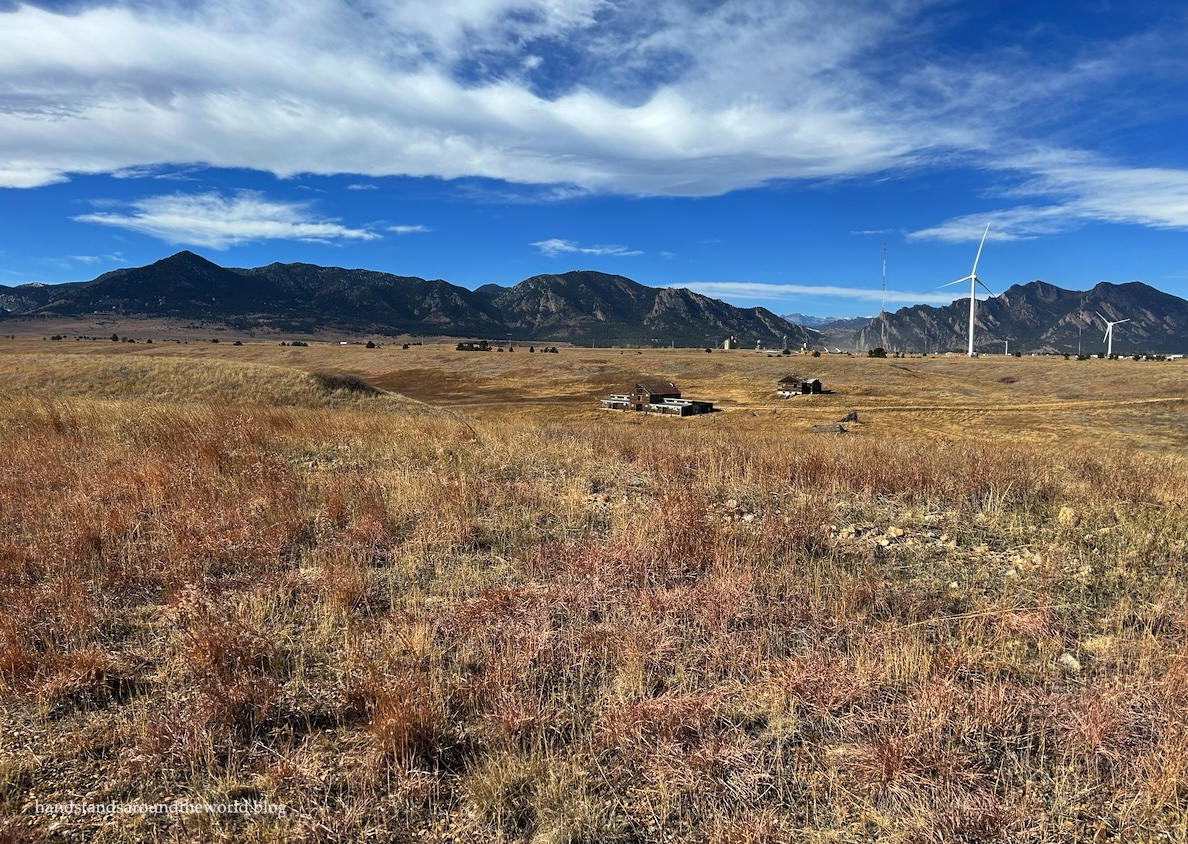
Today, Rocky Flats supports a herd of elk, deer, many bird, rodent, and insect species, and occasional other small and large visitors. Three types of prairie are also preserved here – xeric tallgrass, tallgrass, and mixed grassland. I’m far from an expert on grasses or grasslands, but some research informs me that of these three, the existence of a xeric tallgrass prairie is the most important. Xeric tallgrass prairies have existed since the last Ice Age, though today it is a highly endangered type of ecosystem. Apparently, the fact that there are multiple types of grasslands in the same area is also a rather unique feature of Rocky Flats.

Eleven years after receiving its National Wildlife Refuge designation, Rocky Flats opened to the public in 2018. The former site of the actual weapons manufacturing facilities remains closed, but the surrounding buffer zone has been shown to be safe for human presence, with very low levels of residual plutonium and other contaminants. Regular monitoring of the site continues to this day.
(That being said, it’s not at all difficult to find various individuals and groups fighting against the existence of Rocky Flats and making claims as to its level of contamination. These claims have so far all been disproven by the actual scientific evidence.)

Despite being open to the public, Rocky Flats is very undeveloped. It’s unstaffed and free to visit. There are a couple trailheads and about 11 miles (17.7 km) of hiking/biking/horseback riding trails, and that’s it. I think there’s eventually supposed to be a visitor center – and I hope they build one because there’s so much history they could share. It would be really interesting.
In the meantime, Rocky Flats is a nice place for a leisurely hike. My friend C and I met here on a Saturday morning in November to catch up and hike and enjoy some sunshine. We parked at the northern entrance off Route 128 and headed out to Lindsay Ranch, which combines the Walnut Creek and Lindsay Ranch Loops into a 6.3 mile (10.1 km) roundtrip hike with just 265 feet (81 m) of elevation gain. While we didn’t see much in the way of wildlife – it was the middle of the day in November – there were views aplenty.
And also wind. It’s so windy on the Colorado plains.


Luckily, we found some reprieve from the wind when we turned onto the Lindsay Ranch Loop and dropped down into a depression where we found the remnants of an old cattle and horse ranch. The ranch operated for many years before being purchased by the Atomic Energy Commission upon creation of Rocky Flats Nuclear Plant. One of the buildings was open, but it looked very unstable so we didn’t go past the doorway.


If you’re looking for some grub after your hike, you could head up the road to Flats Beer Garden for some burgers and sweet potato fries and drinks in their outdoor seating area. Definitely get the sweet potato fries. They’re so good!
And that’s really all there is to say about this one. This is far from the most exciting hike in the Denver area, as evidenced by the near complete lack of people… something that’s essentially unheard of nowadays.
But if you’re looking for something not too challenging, away from the crowds, with mountain views and the chance to see some wildlife… head on over to Rocky Flats for a stroll!
Up next: Four Days in Phoenix, Arizona
The Important Stuff:
- Getting there: there are two entrances to Rocky Flats; one on the north and one on the south. Here is a refuge map.
- Fees and passes: none!
- Hiking: there are 11 miles (17.7 km) of trails at Rocky Flats. We hiked the Walnut Creek to Lindsay Ranch Loop, which is 6.3 miles (10.1 km) round trip with 265 feet (81 m) of elevation gain.
- Other: there is no shelter at Rocky Flats… no trees, no place to take cover from the weather. Come prepared for wind, rain, snow, sunshine, and everything in between.


Leave a Reply