After two relatively calm summers in terms of wildfires, I’d forgotten just how much smoke could wreak havoc on hiking plans. Then, the Front Range had its driest start to summer in over 100 years and within 48 hours, multiple fires flared up in the foothills. In addition to forcing hundreds of people to evacuate, the fires blanketed the region with smoke, ultimately ruining our hiking plans.
The fires were relatively small and the smoke was mostly confined to the Front Range, meaning we could escape it by hiking elsewhere. And thankfully, rain arrived a little over a week later and helped extinguish them.
Our plan B on this particular weekend was Booth Lake, located in the Gore Range north of Vail. This one had been on my list for quite some time now, but never quite made it to the top simply because it’s a bit of a drive. Luckily, traffic cooperated on this particular Saturday and we made it there and back without any issues.
Due to its location at the end of a narrow residential street, parking is not allowed at the Booth Lake Trailhead. Options include being dropped off at the trailhead or taking the free shuttle from the Vail Village Transit Center. We did the latter.
Buses depart every 15 minutes, with the :00 and :30 departures being the regular bus and the :15 and :45 departures being the hiker express shuttle. We ended up on the 7:30, which wasn’t really a big deal because Booth Falls is the fourth stop so I’m not sure the express shuttle would have been much faster.
From the shuttle stop, it’s a 0.2 mile (0.3 km) walk up the road to the trailhead.
The trail begins with a series of switchbacks that quickly gain nearly 200 feet (60 m). From here, the grade moderates slightly over the next mile or so as the trail meanders through a mixed pine and aspen forest, with a few open areas that provide glimpses of the surrounding mountains.


The Gore Range is – pardon the pun – gorgeous. It’s also rugged, and every time I hike in it, I’m quickly reminded that with rugged terrain comes steep trails. Booth Lake is no exception. It gains 600-700 feet per mile (110-130 m per km), though this is very unevenly distributed. There were a couple sections in particular that were just brutally steep.
Around 2 miles (3.2 km) up the trail is Booth Falls, which is actually one of the taller waterfalls in Colorado. It’s pretty, but because of the terrain it’s kind of hard to see.


As we walked out to the edge in search of a better view, my husband caught a glimpse of the rear end of a smallish animal as it darted away from our approaching footfalls. He thinks it was a badger.
Above the falls, the trail continues through pine forest, never straying far from the creek. Wildflowers had been moderately abundant the entire hike, but as we approached tree line and the landscape began to open up, the wildflowers went from average to absolutely incredible. They were everywhere.
For the upper 2 miles (3.2 km) of the hike, we were almost constantly surrounded. And above us, the mountainsides were freckled with yellow. I’m not exaggerating when I say we saw hundreds of thousands of wildflowers on this hike.
It was unbelievable!


And finally, after one last steep climb over a headwall covered in wildflowers, we reached Booth Lake.


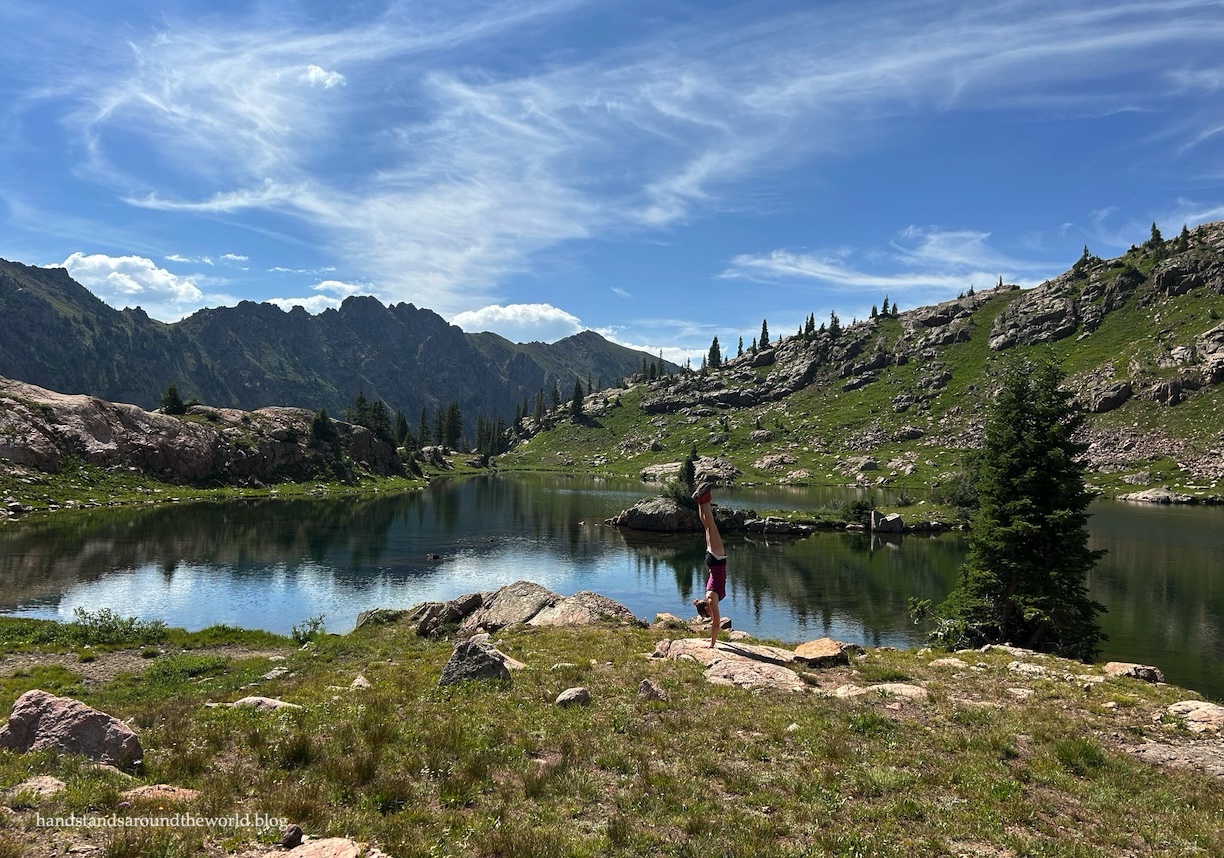
Booth Lake was every bit as lovely as the photos I’d seen, with its calm, clear water surrounding a small island. Across the lake, a couple snowfields lingered as remnants of the previous winter. A closer look revealed a herd of 15 mountain goats on and around the snow, at least 3 of which were adorable babies.


The sun was shining, the wind was fairly calm, and there were only two other couples at the lake. It was very peaceful, and we spent about 40 minutes soaking it all in.


But eventually it was time to retrace our steps through the fields of endless flowers and back to the car. We passed quite a few groups of hikers on their way up; while not as overrun as trails closer to the Front Range, this one still gets quite a lot of use. A lot of people only go as far as the falls, but a good number were headed to the lake. I was thankful, as always, for our early start.


Back at the trailhead, we scooted around a tow truck that was busy towing the car of someone who decided to ignore at least a dozen ‘no parking’ signs and park there anyway, and made our way down the road to the shuttle stop. The bus showed up about five minutes later, and less than ten minutes after that we were back to our car. It was a pretty seamless process, and I appreciate that both parking and the shuttle are free to use.
It may not have been plan A for the day, but Booth Lake did not disappoint.
Up next: our first backpacking trip of 2024!
The Important Stuff:
- Getting there: unless you have someone to drop you off at the trailhead, access is by bus only. Park at the Vail Village Transportation Center (free for the day) and catch the Hiker Express or the East Vail bus to the Booth Falls stop. Buses run every 15 minutes; here is the schedule.
- Fees and passes: none.
- Hiking: roundtrip distance is 10.1 miles (16.3 km) with 3155 feet (960 m) of elevation gain.
- Where to stay: with an early start, this can be done as a day hike from the Front Range, though it will be a long day (at least 3 hours driving time). Closer camping and lodging is available in the White River National Forest or in Vail and the other towns in Summit and Eagle Counties. You can also backpack this trail, though you’ll have to pay for overnight parking. We saw a few good backpacking spots about 1-2 miles below the lake.
- Other: just to reiterate, parking is not allowed at the trailhead or along the road. The town of Vail regularly patrols this and will tow illegally-parked vehicles. We watched it happen.


Leave a Reply to Monkey’s TaleCancel reply