Inspired by our previous Montana roadtrip, my mom and I planned another one this past summer.
Our intended theme was a little less history and a little more scenery.
The actual theme ended up being ‘where can we go next to avoid the rain?’
But despite the less-than-stellar weather, we mostly made it work.
Day #1 found us driving Highway 1, also known as the Pintler Veterans’ Memorial Scenic Highway. This two-lane route connects the towns of Drummond and Anaconda, with a handful of places to stop along the way.
Due to the rain, our planned itinerary quickly went up in flames and we ended up doing things completely out of order. Rather than bounce around and backtrack as we actually did, I’m going to instead discuss each location along the byway in order, beginning in Drummond and ending in Anaconda.

First stop: Philipsburg, a town of about 850 people nestled in the Flint Creek Valley.


No visit to Philipsburg is complete without a visit to The Sweet Palace, the most famous candy store in the state (and, as they claim on their sign, the best candy store in the world). It hadn’t occurred to us to check the hours, because it was Saturday in the height of tourist season, so of course this major tourist destination would be open. It was not. Apparently they’re closed on Saturdays.
Fortunately, we ended up back in Philipsburg on Sunday when the store was open, at which time we I spent way too much money on candy.

We also enjoyed huckleberry ice cream at Philipsburg Creamery and visited Philipsburg Brewing Company, where I sampled a flight, and my mom a soda. (She despises beer. Vehemently.) I expected one of the wheat beers to be my favorite, but surprisingly it was the honey saison that took the crown.


As a thunderstorm blew through, we stepped into the Montana Law Enforcement Museum for some shelter – and a quick gander at the collection of old uniforms, badges, and guns, as well as some history of the various branches of law enforcement in the state.

Back on the road, we soon reached the best part of the byway, in my opinion: a climb through a canyon around mile marker 28. The rocks are slanted, layered, colorful, and just really neat. There is a pullout at the top and it’s definitely worth a stop.

Upon exiting the canyon, we had reached the high point of the highway and the turnoff to Echo Lake. A two mile drive down a fairly well-maintained dirt road brought us to Echo Lake picnic area and campground. We opted to forgo the tables and eat lunch on a small beach while gazing out over the water.


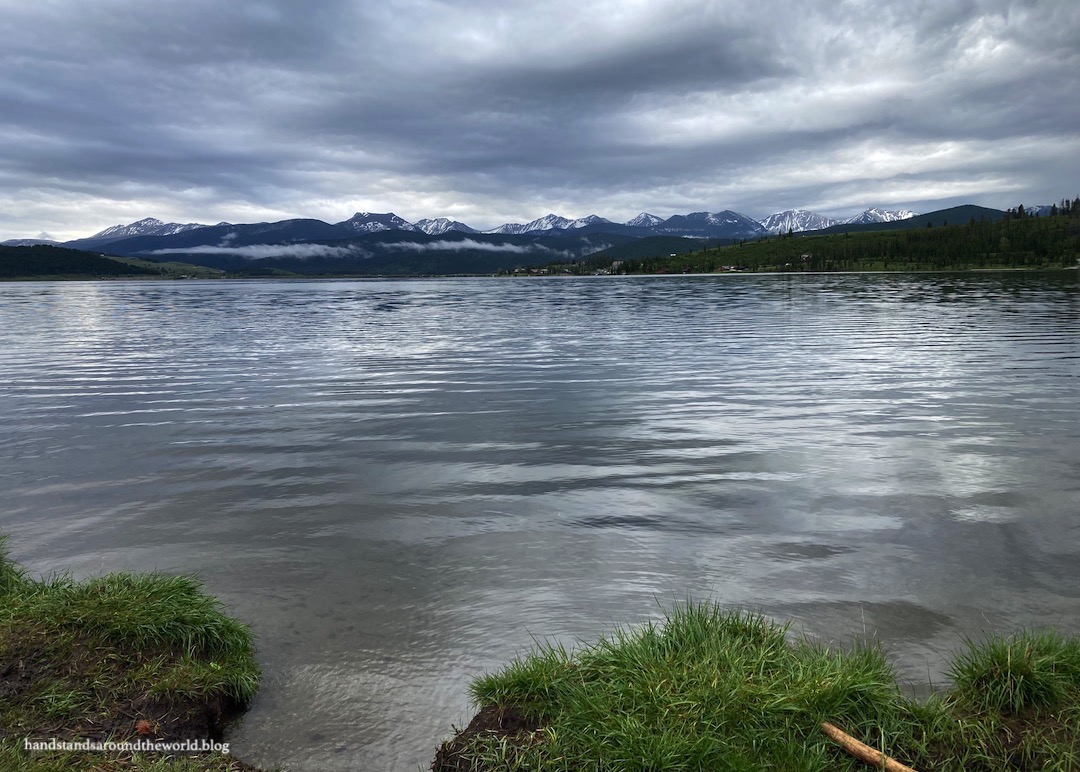
By far, the most visited stop along the byway is Georgetown Lake. This reservoir is a fairly large body of water and a very popular recreation destination. It was also our intended home base for the first two nights of our trip. We’d reserved a site at Piney Campground, with lovely views of the water, and we were very excited.


Unfortunately, we only lasted 24 hours. We were awoken around 2:00am the first night by an enormous thunderstorm; the lightning was blindingly bright, the crashes of thunder were almost immediate, and hail pummeled our tent noisily for at least 20 minutes. A second slightly less intense storm woke us again a few hours later. Ultimately, we stayed dry but we slept terribly. Also, our dining canopy didn’t fare so well.

It proceeded to rain almost the entire next day and was predicted to dump another ¾ inch (20 mm) overnight. Our gear was drenched, everything was muddy, and we were cold and miserable… so we packed up camp that afternoon and got a hotel, and we have absolutely no regrets.

We still managed to make the most of the brief non-rainy stretches to see the remaining sights along the byway. We drove the road all the way around Georgetown Lake, spotting two bald eagles sitting side by side on a telephone pole.


We drove up to St. Timothy’s Memorial Chapel and the “ghost town” of Southern Cross. The chapel was lovely, as was the view from outside. The ghost town was not remotely something that can be considered a town, and was not worth the drive.


Back on the scenic highway, we continued toward Anaconda, turning off onto Storm Lake Road. Storm Lake is about 7 miles (11.3 km) up this dirt road, though our car was not able to make it all the way to the lake. We parked at a pullout before the bridge and walked the remaining 1.5 miles (2.4 km) up to Storm Lake.


Our original plan was to continue up the Goat Flat Trail, but it was ill-defined and completely covered in snow, and storm clouds were descending once again, so we opted not to continue. Storm Lake was beautiful, however, so we didn’t mind the change of plans.


And finally, we’ve reached Anaconda. Anaconda is a copper mining town, through and through. Most of the copper was actually mined in nearby Butte, Montana, but Anaconda was the site of the ore processing. At its heyday, the region was one of the richest copper producing areas in the world. Marcus Daly, one of Montana’s “copper kings,” founded the Anaconda Copper Company and built an enormous smelter in what would soon become the town of Anaconda.
Today, remains of its mining history can be found all over Anaconda. The most obvious is the Washoe Smelter Stack, visible from miles away. The stack is 585 feet (178 m) tall – taller than the Washington Monument – and constructed with over 2.4 million bricks. Beneath the town, numerous flues connect various smelting locations to the Washoe Stack, where all the waste products were released into the air.


We also walked up to the Deer Lodge County Courthouse and, during a brief stretch of sunshine one afternoon, walked the Copper Trail along the edge of Anaconda. This walk took us along a 1 mile (1.6 km) paved path with informational signs. It dead ends at the ruins of the Old Works, a complex of mills, refineries, and smelters built in the 1880s by the Anaconda Copper Company.


All in all, the weather these first two days left a lot to be desired. A lot. We ended up driving back and forth much more than we intended as we reworked our itinerary to dodge the never-ending rain as best we could.
But we still managed to see almost everything we wanted and, in the moments between storms, it was very clear that the Pintler Veterans’ Memorial Highway has earned its ‘scenic’ designation.
The Important Stuff:
- Things to see in Philipsburg:
- Things to see along the byway:
- Granite ghost town (website)
- Echo Lake
- St. Timothy’s Chapel
- Georgetown Lake
- Storm Lake (with a 2WD vehicle, 3 mile roundtrip hike with 400 feet elevation gain)
- Things to see in Anaconda:
- Where to stay: there are campgrounds in Flint Creek Canyon, at Echo Lake, and all around Georgetown Lake. There are RV parks in Philipsburg and Anaconda, as well as cabins, lodges, and hotels in and around Georgetown Lake and Anaconda.
- Other: plan about an hour to drive the entire byway without stopping; depending on how much you plan to stop and see along the way, this could easily be a half or full day drive.


Leave a Reply to The Travel ArchitectCancel reply