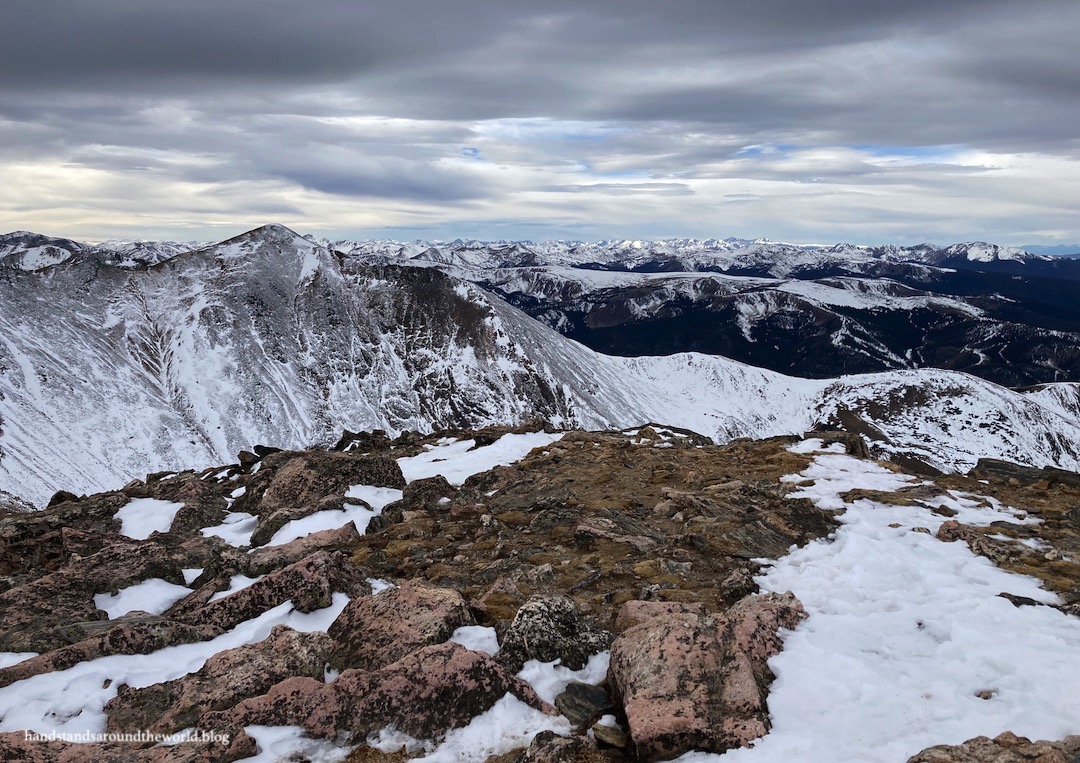
About a month after summiting three 13ers in one day, I found myself back in the very same area as I made my way toward the summit of the adjacent 13,294 foot (4052 m) mountain: James Peak. It’s one that I’d wanted to climb for a couple years now, although I don’t know why, out of the hundreds of 13ers in the state, this one stood out to me. But it did.
So off we went on a Saturday morning with our friends for a chilly summit hike. It was late October now, though you wouldn’t guess it by looking at the mountains. Winter got off to a very slow and non-wintery start this season.
The main route up James Peak begins at the trailhead for St. Mary’s Glacier, which we’ve hiked to before so I won’t say much about it now (but you can click the link above to read about that hike). It’s not a true glacier, though. It’s a semi-permanent snowfield. Barely. There wasn’t much snow left. We didn’t have to walk across it, the trail skirted around it.


Upon reaching the top of the snowfield, the terrain opened up and we found ourselves in the middle of a vast, relatively flat expanse of tundra. The next mile of the hike was more of a leisurely stroll.


Much elevation gain awaited, though, as we were still about 1600 feet (490 m) below the summit. A few 4WD roads traverse the terrain here; we crossed one and then connected up with the Continental Divide Trail which took us the rest of the way to the summit. From the trail, the views down to Loch Lomond and the lakes above it were beautiful, and I also enjoyed looking along the ridge at the three adjacent 13ers I’d climbed about a month earlier.


The closer we got to the James Peak summit, the steeper the trail became. It was a steady grind, and slow going at times, but we made it to the top!


There may not have been much snow, but there was certainly plenty of icy winter wind up here. Despite working hard to reach the summit, we didn’t stay long. It was far too cold. We took in the views, quickly ate a snack, snapped some photos (in which my face was so cold I couldn’t even smile properly… I look like someone put a skunk under my nose), and hurriedly began our descent.
The weather warmed and the wind calmed as we descended, and by the time we were back to St. Mary’s Lake we had taken off most of our layers. When we got back to the plains, it was about 70°F (21°C). If you ever want to experience summer, fall, and winter in one day, come to Colorado in October and climb James Peak. But be sure to bring microspikes, a hat, gloves, many layers… and probably some shorts and sandals for when you get back to town.
I’m not actually complaining, though. It’s pretty neat to live in a place where you can summit mountains most of the year. For me, James Peak was my tenth and final 12,000+ foot mountain of the year.
This hike also wraps up my 2021 Colorado posts here on WordPress.
Up next: our Thanksgiving trip to the Utah desert. Stay tuned!
The Important Stuff
- Getting there: the parking area is off Fall River Road, 9 miles (14.5 km) north of the Fall River exit on I-70; it’s marked with a blue sign and will be obvious due to all the cars. The road is paved and accessible with any car.
- Fees and passes: there is a $20/car (cash only) parking fee at the trailhead; put the fee into an envelope, deposit it in the slot, and place the tear-off tab on your dashboard.
- Hiking: round trip distance to the summit was 8.4 miles (13.5 km) with 3000 feet (915 m) of elevation gain.
- Where to stay: this is probably best done as a day hike from the Front Range or Clear Creak County; depending on your starting, point, it’s a 1-2 hour drive to the trailhead.
- Other: St. Mary’s Lake and James Peak are extremely popular so don’t expect solitude on this hike. The trail to the lake is almost always busy, the section above the snowfield is commonly used for outdoors safety training classes, and James Peak is popular amongst backcountry skiers. For the best experience and to secure parking, arrive early.


Leave a Reply to alisendopfCancel reply